
Full-time employment is going backwards following the Government’s policy decisions in relation to employers.
This is according to data compiled from 90,000 employees across small businesses with 1-500 employees, collected at the end of last month to test the impact of the Budget which saw employer NICs increased by 1.2%.
Although they are not due to come into force until April, many companies appeared to react quickly with staff cuts and a freeze on hiring.
Overall, the number of people in full-time employment shrunk by 1.2% month-on-month, and 0.1% across all employment types, according to Employment Hero’s SmartMatch Salary Report, which notes that a small 0.3% boost to part-time employment – probably related to seasonal hiring – somewhat made up for the drop.

Fitzgerald: businesses are acting now
But the reduction in full-time roles led to a dip in month-to-month salaries for full-time workers, from a median of £36,910 to £35,870. This was still well up on a year ago, when the median was £34,200.
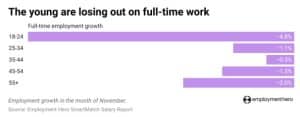
New employees, as our graph right shows, seem to be the ones losing out as employers at SMEs opted to stop hiring.
There were 4.8% fewer 18-24 year olds in full-time employment at the end of November compared to October, the study showed. This was down 0.4% on the end of November 2023, meaning across the entire year youth full-time employment had shrunk.
This compared to a far more modest reduction of 0.5% month-to-month for those aged 35-44.
Employment Hero UK MD Kevin Fitzgerald said these figures showed a huge vote of no confidence in the Government’s Budget from employers.
“These figures show the disastrous decision to tax employment is already costing jobs. The 4.8% drop in full-time employment among 18-24 year olds is especially troubling, as it indicates employers are pulling back on bringing fresh talent into their organisations.
“We’re seeing these employment cuts months before the NIC increase even takes effect – suggesting businesses are taking pre-emptive action to protect their bottom lines. While some workers are able to shift to part-time roles, this isn’t a sustainable solution for the UK economy. The Government needs to seriously reconsider this policy before it does lasting damage to employment, particularly for young people entering the workforce.”
Related
Preparing for the Autumn Budget